Skip to article

By 10 min read

Body & Lifestyle

Your Body Is Talking. Here Are 7 Signals You're Ignoring.

The afternoon crash. The bloating after lunch. The 2 a.m. wake-up. They feel normal because they're common, but common isn't the same as healthy. Here's how to start listening.

Signals to listen for

🔋
Tired after a full night's sleep
01
🍬
Cravings you can't shake
02
🎈
Bloating after meals
03
🌙
Wired at night, groggy at dawn
04
☁️
Brain fog
05
🌿
Skin that won't settle
06
🪨
Tight shoulders and headaches
07

Why we stop hearing our bodies

Most of us were taught to push through. Tired? Have another coffee. Bloated? Loosen the belt. Can't sleep? Scroll until you can. Over time, the small signals get quieter, not because they've gone away, but because we've learned to tune them out.

Your body is always giving you feedback on how you eat, drink, move, rest and handle stress. These signals don't usually show up as one big alarm. They come as small, everyday nudges. Catch them early and a few simple changes can often make a real difference.

At Lifeline, we start with lifestyle. Our approach is built on the natural laws of health: nutrition, water, rest, exercise, sunlight, air, trust, emotional health and more. Each signal below links back to one of them.

A signal is information, not a diagnosis

Everything here is general wellness education. One signal on its own rarely tells the whole story. If something is severe, sudden or won't go away, please speak with your doctor. You'll find a "when to see a doctor" list further down.

The 7 signals

What your body may be trying to tell you

For each signal: what it can point to, and a few small things you can try this week.

🔋
SIGNAL 01

You wake up tired, even after a full night's sleep

If eight hours in bed still leaves you dragging, it's worth looking at what happens before and during sleep, not just how long it lasts. Late, heavy dinners, screens in bed, caffeine after lunch and an irregular schedule can all leave sleep lighter and less restoring.

An afternoon energy crash can also follow meals built on refined carbs and sugar, which give a quick lift and then a dip.

Natural laws: Rest · Nutrition

Try this week

  • Finish dinner 2–3 hours before bed
  • Keep the same wake-up time, weekends included
  • Swap the afternoon coffee for water and a short walk
  • Build lunch around beans, whole grains and greens
🍬
SIGNAL 02

You crave sugar or salty snacks every day

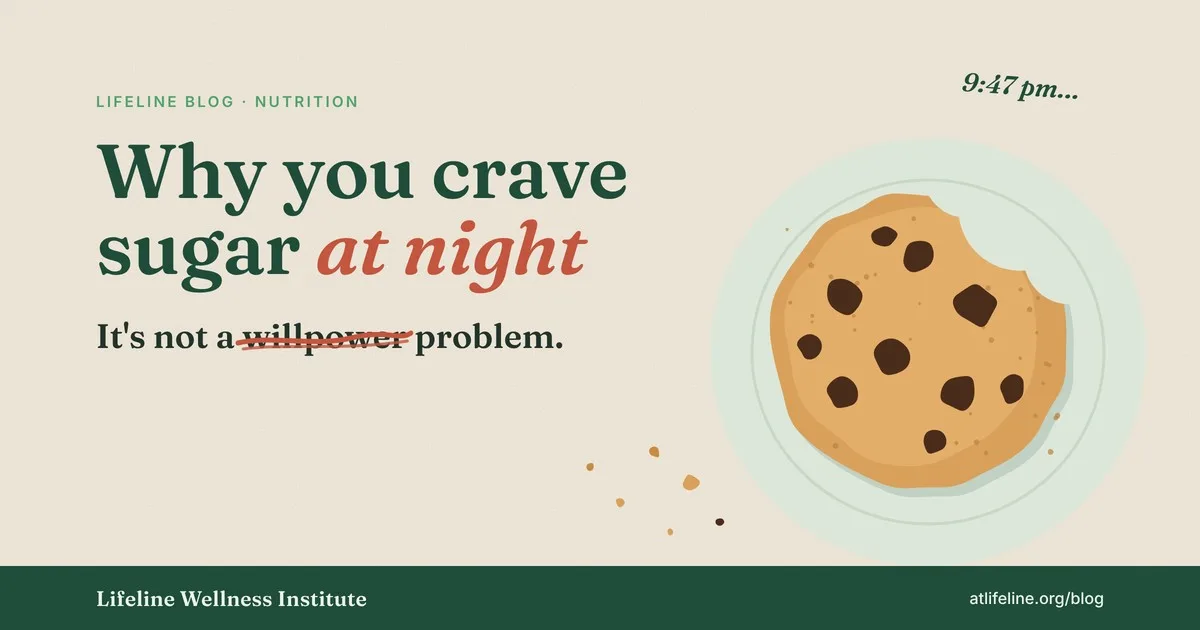
Cravings aren't a lack of willpower. They often show up when meals are skipped or low in fiber and protein, when you're short on sleep, or when you're using food to manage stress or boredom.

Sometimes thirst shows up as hunger too. A craving is a good moment to pause and ask: am I hungry, tired, thirsty or stressed?

Natural laws: Nutrition · Temperance · Emotional Health

Try this week

  • Eat regular meals so you don't arrive starving
  • Add lentils, chickpeas, nuts or seeds to each meal
  • Drink a glass of water and wait 10 minutes
  • Keep fruit on the counter and sweets out of sight
🎈
SIGNAL 03

You feel bloated or heavy after meals

Regular bloating, gas or a heavy feeling after eating often points to how you eat as much as what you eat. Eating fast, eating late, large portions, lots of processed food and not enough water can all slow digestion down.

If you're adding more plants, go gradually and drink plenty of water. Your gut needs time to adjust to extra fiber.

Natural laws: Nutrition · Water · Temperance

Try this week

  • Put your fork down between bites and chew well
  • Drink water between meals, not in big gulps with them
  • Take a 10-minute walk after your largest meal
  • Keep a simple note of when bloating shows up
🌙
SIGNAL 04

You're wired at night and groggy in the morning

Lying awake with a busy mind, or waking in the early hours and not getting back to sleep, is often a sign your body clock and stress levels are out of rhythm. Bright screens late at night and very little daylight during the day can both make this worse.

Natural laws: Rest · Sunlight · Trust

Try this week

  • Get 10–15 minutes of morning daylight outside
  • Put screens away 30–60 minutes before bed
  • Write tomorrow's worries on paper before you sleep
  • Keep your bedroom cool, dark and quiet
☁️
SIGNAL 05

Your thinking feels foggy or slow

Forgetting why you walked into a room, re-reading the same email three times, struggling to focus by mid-afternoon. Brain fog is often linked to the basics: not enough water, poor sleep, long hours sitting still, stuffy rooms and meals that spike and drop your energy.

Natural laws: Water · Air · Exercise

Try this week

  • Keep a water bottle on your desk and sip through the day
  • Stand up and move for 2–3 minutes every hour
  • Open a window or step outside for fresh air
  • Try a few slow, deep breaths before a hard task
🌿
SIGNAL 06

Your skin won't settle

Your skin is a visible window into what's happening inside. Dullness, dryness or breakouts that keep coming back can reflect low water intake, heavily processed food, poor sleep and stress, not just the products you put on it.

Natural laws: Water · Nutrition · Rest

Try this week

  • Start the day with a glass of water
  • Eat a "rainbow": berries, carrots, leafy greens, peppers
  • Cut back on fried and packaged snacks
  • Protect your sleep. It's when your body repairs
🪨
SIGNAL 07

Tight shoulders, a clenched jaw, regular headaches

Stress doesn't only live in the mind. It shows up in the body as tight shoulders, a stiff neck, a clenched jaw and tension headaches. Long hours at a screen and very little movement add to it. These signals are often your body asking for a pause.

Natural laws: Emotional Health · Exercise · Trust

Try this week

  • Roll your shoulders and stretch your neck every hour
  • Take a 20-minute walk outdoors most days
  • Notice and relax your jaw a few times a day
  • Talk to someone you trust about what's on your mind
Quick self-check

A 2-minute body check-in

Listening to your body is a habit. Once a day, maybe with your morning water or before bed, ask yourself these four questions.

Tap each one to see what to look for.

How is my energy right now, on a scale of 1 to 10?
Notice when it dips during the day. A drop after meals points to food; a drop late in the day can point to sleep, water or stress.
How did my body feel after my last meal?
Light and steady, or heavy, bloated and sleepy? Over a week, patterns start to show which meals work for you.
Have I had enough water and fresh air today?
Pale yellow urine is a simple sign you're drinking enough. If you've been indoors all day, a few minutes outside counts.
Where am I holding tension?
Scan from your forehead to your feet. Jaw, shoulders and stomach are common spots. Breathe slowly into that area for a few breaths.
Important

When a signal needs a doctor, not just a habit change

Lifestyle changes can support how you feel every day, but they don't replace medical care. Some signals need to be checked by a doctor straight away.

If you're already under a doctor's care or taking medication, talk to them before making big changes to your diet or routine.

See a doctor if a signal…

  • comes on suddenly or is severe
  • keeps getting worse, or lasts more than a couple of weeks
  • comes with chest pain or shortness of breath
  • comes with unexplained weight loss or fever
  • involves blood in your stool or urine
  • is a sudden, very bad headache unlike any before
Key takeaways

What to remember

01

Common doesn't mean normal. Daily tiredness, bloating and cravings are worth paying attention to.

02

Most signals trace back to the basics: what you eat and drink, how you sleep, move and handle stress.

03

Small, steady changes, like earlier dinners, more water and a daily walk, often help more than big overhauls.

04

A daily 2-minute check-in builds the habit of listening before signals get louder.

05

Severe, sudden or lasting symptoms need a doctor. Lifestyle supports care; it doesn't replace it.

06

You don't have to decode it alone. A Care Partner can help you see the full picture.

Start here

Not sure what your body is telling you?

That's exactly what Know Your Health (KYH) is for. In a 75-minute analysis, a Lifeline Care Partner sits down with you to look at the full picture: how you eat, sleep, move and feel.

You leave with a clear snapshot of your health and a suggested next step that fits your life. For many people, that next step is Detox Your Health (DYH), our 7-day guided reset, with new cohorts starting every Sunday.

Book Know Your Health → Explore the 7-day DYH
🩸

Hemo Care

A look at what your blood can reflect about your lifestyle.

😊

Joy Care

Your stress, mood and emotional wellbeing.

🌱

Self Care

Daily habits: food, water, sleep and rest.

🏃

Fit Care

How you move and how your body responds.

At-home programs

Support you can start from home

Guided by a Care Partner, built around the natural laws, and designed to fit real life.

75-minute analysis

Know Your Health

A clear snapshot of your health.

Book KYH →
7-day program

Detox Your Health

A safe, seasonal reset.

Join DYH →
14-day program

Transform Your Health

Focused action. Real momentum.

Explore TYH →
12-week program

Sustain Your Health

Habits that last.

Explore SYH →
Residential programs

Step away and reset at our Knoxville campus

For when you're ready to pause everything and give your body full attention.

Residential

Life Transformation Program

Pause. Reset. Restore.

Learn more →
Residential

4-Day Boost

A quick, powerful reset.

Learn more →
Residential

Life Refresh Program

A renewal for past participants.

Learn more →
Residential

Cancer Wellness Package

Strengthen. Heal. Renew.

Learn more →
FAQ

Questions people ask

Still have questions? Email us at yourfriends@lifelinewellnessinstitute.org or call +1-309-289-2150.
What does it mean to listen to your body?
It means noticing everyday signals such as tiredness, cravings, bloating, poor sleep or brain fog, and treating them as information about your habits rather than something to push through or cover up.
What are common signs your body needs a reset?
Feeling tired after a full night's sleep, strong sugar or salt cravings, regular bloating, trouble falling or staying asleep, brain fog, skin changes, and frequent tension headaches or tight shoulders.
When should I see a doctor about body signals?
If a signal is sudden, severe, getting worse or lasts more than a couple of weeks, or comes with chest pain, shortness of breath, unexplained weight loss, fever, or blood in your stool or urine. Lifestyle changes support your health but don't replace medical care.
How can Lifeline help me understand my body's signals?
Know Your Health (KYH) is a 75-minute analysis with a Care Partner covering Hemo Care, Joy Care, Self Care and Fit Care. You'll get a clear snapshot of your health and a suggested next step, such as the 7-day Detox Your Health program.

This article is for general education and does not replace advice from your healthcare professional.

Share this article

Get new articles by email

Subscribe to the Lifeline Blog